Sunday, April 8, 2012

Brief Overview of Citizen Journalism

It's crazy to think that YouTube has only been around for seven years. I have grown up with this platform for expression and entertainment and have definitely taken this medium for granted. This is a place where voices are heard and realities from all over the world are only a click away. A place that is used as a window into lifestyles, cultures, beliefs, and religions that can be viewed right from the comfort of your own computer. A site that has no discrimination and welcomes all. YouTube, in my opinion, is the hub of all citizen journalism. Citizen journalists who blog, write articles for online magazines, or even those who posts videos or pictures all come to YouTube to either post videos or do research for their topics. Any person who considers themselves a journalists has constant interaction with YouTube and it's viewers.

The book we have been reading touches on multiple ways citizen journalism has impacted the world and how the people around the world view this new source of information. There are professional journalists who strongly oppose citizen journalism and then there are those that see it as an expansion of the relationship the media has with its viewers. The main question that surrounds citizen journalism is the lack of authenticity and accountability. The book shows many instances where certain people have done serious harm due to not checking facts or simply trying to cause harm. Citizen journalists are not held to the code of ethics as professional journalists which has the potential to cause economic issues,  possible damage to one's reputation, and even can put other's safety at risk. With all these negatives, one might question why the people do not just leave the story telling to the professionals.

While there are many negatives there are just as many positives surrounding this new major way to obtain news. Blogs, social media sites, and citizen journalist platforms provide instant access to possible eye witness accounts where the mainstream media may not be able to cover at that time. This has occurred multiple times recently mainly revolving around natural disasters such as earthquakes, tsunamis, tornadoes, and hurricanes. These citizens that record these disasters are physically in harms way and trying to capture these moments for the world to see. These people instantly become journalists, whether they want to or not, by holding a moment in time and securing it for others to see. If there are times when the mainstream media cannot physically get to a location where news is happening, you can rest assure that there will be someone with a phone or camera catching some piece of the story. The clip above includes the tsunami that hit Japan in 2011 and is just one example of how thousands of everyday people can become citizen journalists.


Another major positive to citizen journalism is that it allows people to show all angles of a story without a mainstream media outlet filtering certain parts out. Mainstream news tends to have a political agenda and will pick and choose what stories to tell and what stories to leave out. This raises the question if anyone should have the power to control what news and stories people hear? These online sources for anyone and everyone to posts things provide areas where people can present unbiased stories. It comes down to people having choices from where they get their news. There are no longer only three or four news stations to get information from but thousands that the Internet is home to and a good portion of these alternatives are citizen journalists.

Ultimately citizen journalism has taken the world by storm and is changing the way people get their news and who they obtain it from. There are positives and negatives to any situation but I believe the solution to the few negatives that citizen journalism presents is for people to do research on what they hear. If a news story is going to alter your choices in life then, in my opinion, one must research this story through multiple mediums. The mainstream media can sway your opinion and citizen journalism may not always be reliable therefore one must check multiple resources.

The world is evolving and people are finally starting to participate in it. Individuals are making their opinions known and voices heard through global platforms such as YouTube. Susan Sontag, a literary icon and well known political activist, said, "Do stuff, be clenched, curious. Not waiting for inspiration's shove or society's kiss on your forehead. Pay attention. It's all about paying attention. Attention is vitality. It connects you with others. It makes you eager. Stay eager." People are paying attention to the world around them and broadcasting not only their stories but stories that the mainstream media may have considered "un-newsworthy." Citizen journalism has invited everyone to hear all stories of the world: unbiased and unscripted.  

Wednesday, March 21, 2012

Online Streaming


I go on and on in this blog about how technology has changed over the years and how much it has impacted our everyday lives, but the evolution of television, in my opinion, is the one product that has gone through the most changes. When the television was invented it took years for people to become fully accepting of it. It took years for the vast majority of the population to own at least one TV and now American households have at least three per house. There are now multiple size televisions to choose from, different brands, LED, LCD, and Plasma screens, and even 3D televisions. Another decision I never thought could be possible is how people decide to access their television.

There are multiple mediums for people to view television including through their television providers, computers, phones, and now online streaming services. The main medium I will be focusing on is the online streaming phenomenon that has taken over the technology world by storm. Gaming consoles and televisions are not just things to play video games on or to watch live television but to stream other videos from online. These designs offer other apps and games that the original device could not offer by itself. There is now a necessity for a product to not just offer one service but to provide multiple services in one. All of these all in one products have at least one online streaming service whether it be Hulu, Netflix, Crackle, or many others. Here is a quick description of how to stream your online footage and what devices you can use to stream the content onto your television.


Roku is one, somewhat new, product that has definitely caught my eye along with thousands of other television lovers. This is a product that in my opinion is best fit for my age group, the young adult living on their own trying to get as much stuff as possible for as cheap as possible. With products ranging from a one time price as low as $50 to $100, this little box offer access to just about whatever you can already access online and brings it to the big screen in your house. With products such as Roku that completely bypass television providers and their large monthly fees, I wonder if some people may consider this as a complete alternative to live television. My sister who is recently engaged and just moved into her own house, is tight on money and has a Roku. She and her fiance do not have a television provider therefore do not watch live television in their home, but they have access to thousands of movies and other forms of entertainment through Roku. For them, Roku is an alternative to live television and they do not feel as though they are missing out on anything. Like I said earlier, I believe Roku, and products like it, have tapped into the young adult demographic who seek as much entertainment as possible while paying as little as possible. 

Where can Roku and other online streaming products go to next? Here is another video about the upcoming Roku Streaming Stick that was unveiled at the CES 2012 Convention.

I believe the Streaming Stick will be extremely successful due to its portability and being wireless. I have a Roku box as well and the wires are bigger than the actual box, which I find quite annoying. You find a place for the box but then you have to find a place to hide all the big, black, and ugly cords. Roku obviously agreed with me and found a solution.

Who knows where television will be 5 years from now. With each year that passes audiences gain more and more control over what they watch, when they watch it, and what they watch it on. How much more can the audience control? We will soon find out in the years to come. 

Friday, March 16, 2012

Wikinomics


Technology has created a platform for people to voice their opinions and this platform continues to grow day by day. Individuals who were once considered amateurs with no voice may now be viewed as respectful people whose opinions are highly valued. Large corporations, and even small local businesses, now seek outside help from consumers. Companies pursue these consumers for new ideas concerning products and or services. Mass collaboration, such as this, has recently been defined as Wikinomics.

I have always heard the phrase, “Two heads are better than one,” but why limit it to two minds. The whole concept of Wikinomics is for people to take advantage of what technology allows us to do, which is to mass communicate. In today’s economy if a company does not utilize social media to interact with their consumers or stockholders they will not succeed. Many companies have formed over the years to help other companies transition into this digital culture. A very interesting company that I found is known as iStrategyLabs based out of Washington DC. 
According to Peter Corbett, founder of iStrategyLabs, they are a service that “builds online and offline movements that engage communities through creative marketing, experimental uses of social media, and civic innovation programs of all kinds.” Some of their services include social media marketing, digital marketing, experimental marketing, youth marketing, content creation, civic innovation, and custom labs. iStrategyLabs clients include Disney, Ford, ABC, ESPN, U.S. Army, and Walmart. Their website is really cool and goes more in depth with their services and what all they can do for a company looking to expand into the world of mass communication. 

Here is a video where Corbett explains what is necessary in order to successfully set the stage for social mass collaboration. 
He discusses the concept of a give and take relationship, whether it be among coworkers trying to communicate or people outside the company attempting to mass collaborate. In order for it to be a successful relationship, the company must make sure they are giving something back. Some companies offer discounts or freebies to consumers who complete a survey to encourage feedback whereas some do contests as an incentive. 

The ultimate idea revolving around Wikinomics is the act of sharing information to form or make ideas better by using more minds. No one mind is better than the other but joined together for the same cause can be unstoppable. 

Monday, February 27, 2012

Hacktivist Group ANONYMOUS Taking Things Too Far?

Today's society is controlled by our technologies whether they are accessed by mobile phones, computers, or tablets. What if the technologies that we use, that mainly rely on the Internet, suddenly were censored? This has been a disheartening question and topic that has been recently discussed throughout the past few months through the SOPA and PIPA acts. With the formation of these acts came massive uproar from many protestors and even more recently by hacktivists groups. The definition of a hacker is one who enters into an unauthorized computer database. Hackers have been around for years but not until recently have they ever made such a massive impact on society by creating cultures among themselves. The main group that has been found all over the controversial topic of censorship is known as "Anonymous." After looking deeper into the hacktivism culture I instantly found this aggressive hacktivist group, Anonymous, and was shocked, and still am shocked, that I had never heard of these protestors much less seen any of their messages. So for those who have been living under a rock with me, here is a brief trailer of what the Anonymous group has done and what they stand for. 


Anonymous is a group that is forming and growing through the world. They stand up and fight for the freedom of speech and the freedom to use the Internet without censorship. The group not only speaks and protests for what they believe in but acts upon their beliefs. Anonymous aggressively forces people to take notice in what some would say as illegal and questionable approaches.

Most recently, Anonymous ferociously put themselves on the world's radar after the shut down of the most popular file sharing website, MegaUpload. This take down of MegaUpload represented the government acting on copyright laws. It was the most publicized shut down and began  the censorship uproar. Anonymous' retaliation to the destruction of this file sharing website was what got them noticed in late January of this year. This revenge included successfully hacking into websites such as the Department of Justice, Motion Picture Association (MPAA), Recording Industry Association of America (RIAA), the Universal Music Group, and many more. Not only has the hacktivist group shut down multiple websites and databases but they have also stolen hundreds of security information including credit card numbers. 

In December of 2011, Anonymous gathered credit card information from a global intelligence company, Stratfor, who supposedly failed to encrypt their client information. Along with credit card information was personal emails that were stolen, some even forged, and then published without consent. Anonymous used this personal information obtained to make numerous contributions to charities such as the American Red Cross, CARE, and Save the Children. The donations that were unwillingly donated summed up to be around $1 million. Anonymous has definitely made their opinions known and seems to be here to stay. 

The illegal act of hacking is extremely difficult for authorities to try and prevent considering the crime scene is in cyberspace and not a physical room one can just walk into. With technology, a thief can steal from someone without even being in the same geographical place. Theft is not a new crime but with the Internet it redefines the act. The re-creation involves a larger extent of reach of the theft, the degree of damage, the increased visibility the Internet provides, and the actual operation itself. Anonymous took every advantage that the Internet has to offer to create the most damage with an unlimited audience. 

The question revolving around hacktivism is where should the line be drawn and if there should even be a line. Did Anonymous go too far in attempt to be heard? Should there be censorship laws? 

Monday, February 20, 2012

Digital Cultures: Chapter 5- Video Gaming


Its unbelievable to look back at the history of video gaming. From the games that set the foundation for the gaming industry such as Pong and Pac-Man from Atari to the many Call of Duty games now offered on multiple consoles. Here is a corny rap video that goes through the stages of the gaming world from Atari to the Nintendo Wii. 


These games that were once connected to our televisions and restricted us to our homes if we wanted to play them, however it does not hold us back anymore. A lot of video games can now be accessed through multiple mobile devices such as cell phones, tablets, laptops, and portable gaming devices such as Nintendo DS and PSPs.  There seems to be no limitations to video games and with technology developing at unremarkable rates who knows where they may take us. These gaming consoles are not just for video games but have multiple uses and possibilities that are found within one device. I will leave you with one more video that visually shows you the endless possibilities of the Xbox Kinect. Who knows where these video consoles may lead us in the near future. How will these devices change our lifestyles in the years to come? I for one am very excited to see where technology leads the gaming industry and what other industries the video gaming world may dive into.


Monday, February 13, 2012

Chapter 14


In this chapter, Sherry Turckle finds a way to tap into teenager’s inner wishes and needs. It’s really sad that children now have to fight for their parent’s attention due to the distraction and constant need to feel connected elsewhere. Children, teenagers, and even young adults growing up in this crazy digital culture are secretly wanting attention from the people they need it from the most, their parents. At times, parents are physically present but not mentally with help from their cell phones and laptops, and this could be even more damaging than not being there at all. It comes across as more of a rejection when a child sees their mom or dad choosing to ignore them. One way parents rationalize being on their cell phones and computers is because their kids are constantly glued to them as well. In my opinion, its almost as if the parents have become the kids and have forgotten how to enjoy the life that is in presently in front of them.


A major reference in the chapter that I loved was the reference to Henry David Thoreau’s Walden poem. In the poem Thoreau leaves society and experiences nature and the beautiful world that surrounds him. People in today’s culture consider digital technology as our present day Walden. Kevin Kelly, a previous editor of Wired, describes the web as having boundaries that are, “unknown, unknowable, and is mysteriously uncountable.” The possibility of constantly being connected leads people to seek a bit of space. This bit of space, in Turckle’s eyes, “could leave room for a child to be a child a bit longer.” A major advantage and privilege of being a child is the fact that adults are somewhat a cushion and shield from the outside world. These joys of childhood are being gradually erased from children growing up in this digital culture because of these technological distractions from real life.

Reading Alone Together has made me thoroughly analyze how much time I, personally, spend on my cell phone and laptop. While reading this book I have already caught myself preferring to converse over a phone call and not through text messages. I have also become more aware of the amount of time I spend on social media and browsing the web. This was a very enjoyable, easy, and beneficial read not limited to any age group. 

Wednesday, February 8, 2012

Chapter 12


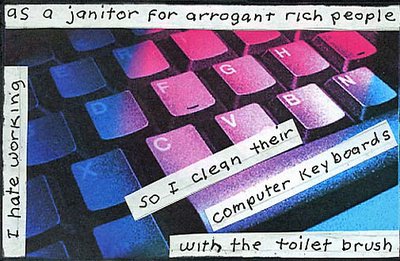
Why is it so attractive and addicting for people to put extremely personal confessions on the Internet? There are multiple websites for people to choose from when sharing these private revelations such as PostSecret, GroupHug, and even popular social media sites such as Facebook and Twitter. All throughout this chapter Turckle discusses why people are sucked into this new obsession and what resolutions they get after partaking in this act. It’s as if, Turckle suggests, “online confessions are a new genre” of writing altogether. “Exaggeration might increase readership,” which implies that a lot of these online confessional sites are mainly for entertainment. Here are some interesting examples PostSecrets I found.


Some participants are seeking acceptance after getting their secrets out in the open. There is a sense of relief that users feel after getting things off their chest that they may have been too scared to express in face to face interactions with friends or family. This makes me question why people are drawn more towards interacting with strangers online about their darkest secrets versus their family and friends that they may physically see on a daily basis.  In my opinion people in society are too judgmental and opinionated to accept other people’s beliefs and values. In a world that is so diversely populated and filled with various religious beliefs we have to find ways to live peacefully with one another and respect each other’s views.

While technology is providing more ways to interact and communicate with more people it is crippling society in face-to-face human interaction. People don’t know how to handle confrontation anymore and resolve to dealing with difficult situations in text or email. There is no accountability when taking responsibility for an individual’s own actions. The Internet allows people who struggle with this to apologize or confess to something online but not to the person who might need to hear it. This lack of physical interaction among individuals takes away from relationships, as it is less personal when communicating through the Internet. Its almost as if these online confessions are a temporary emotional fix, allowing users to steer away from the true issue.

Online confessions I believe to be both positive and negative. It can be positive for those that are scared to admit something about themselves to family and friends but and can practice it on various Internet sites. It can give people a sense of security knowing that they are displaying anonymous posts where readers cannot trace it back to them.

I really liked how Turckle suggests forming more communities is somewhat a solution to encourage people to express their feelings in person to family and friends. She defines a community as a, “a place where one feels safe enough to take the good and the bad. In communities, others come through for us in hard times, so we are willing to hear what they have to say, even if we don’t like it.” In order to form these communities Turckle is describing, people need to trust others and feel as though they will not be judged. It is up to us to change society’s path it is currently on that will eventually do away with human interaction and replace it with online platforms for communication.